


THE EMAIL
On a morning in early 2022, JPMorgan’s marketing team launched their first campaign to Frank’s customer base. The bank had paid $175 million for access to 4.25 million verified student users - young adults at the start of their financial lives, complete with names, emails, phone numbers, and exhaustive financial aid data. All of it, the seller had sworn, “fully consented for JPM marketing.”
The first mass email went out.
Seventy-six percent of emails bounced back undeliverable.
Only 1% ever got opened.
There was trouble in the State of Denmark.
Likely within hours of JPMorgan double-checking their own methodology, the first member of the bank would have pondered the alternative explanation, which soon would be irresistible. These weren’t Frank’s customers.
THE PRODIGY
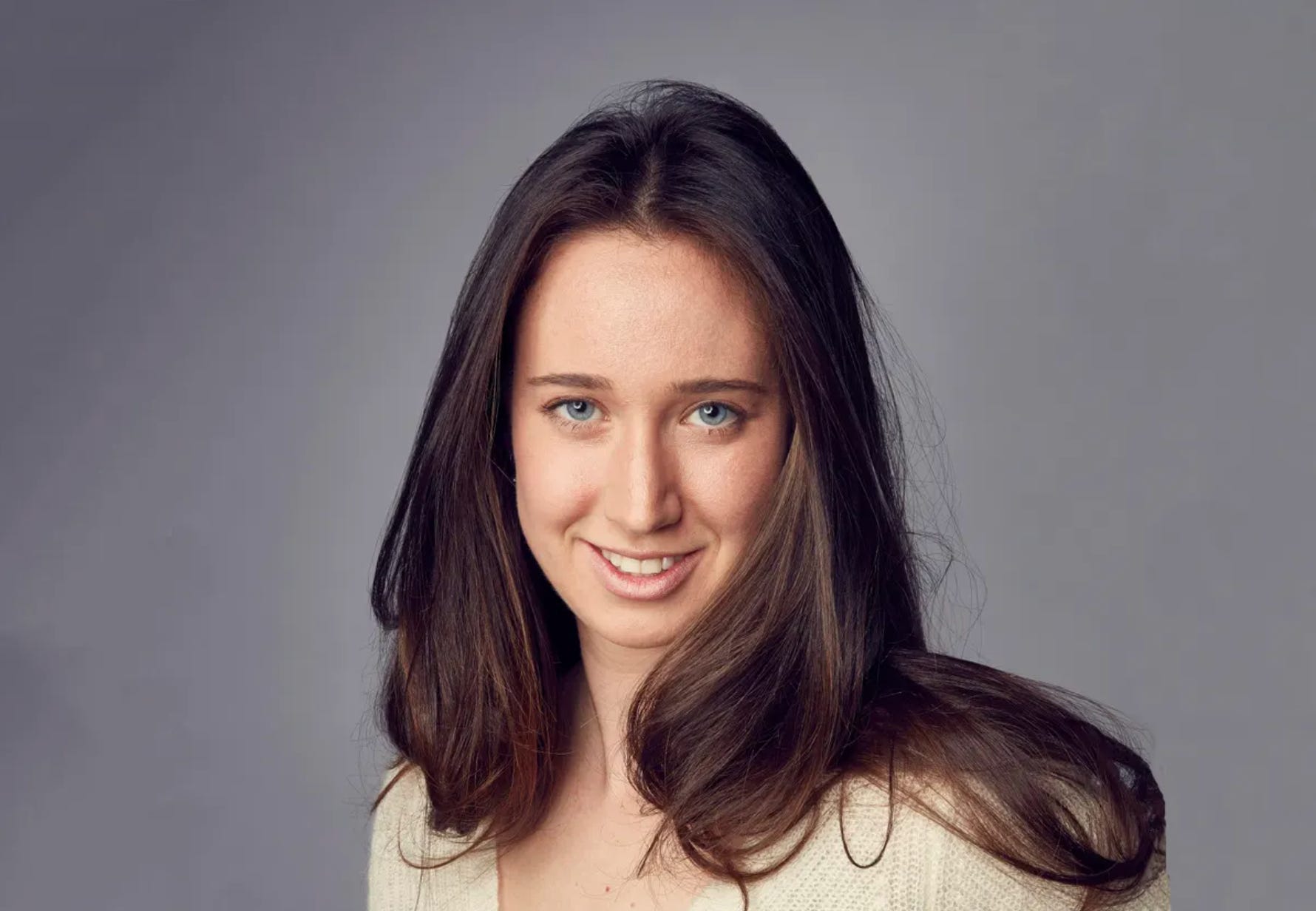
Charlie Javice was a startup prodigy devoting her life to those who needed help. She’d made Forbes’ 30 Under 30. The Byzantine forms that kept needy students from getting their due financial aid were being obliterated by Javice’s visionary brilliance. Form filling tumbled from hours to seven minutes.
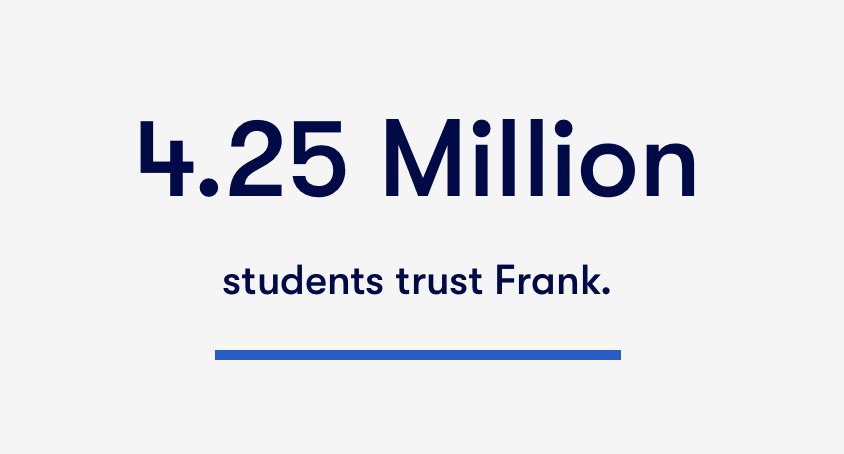
On Frank’s website, they crowed about “Why 4.25 million students choose Frank” - a stunning number for a five-year-old company.
JPMorgan took note and wanted access to the banking world’s dream: an annual deluge of nascent adults, whose background and trajectory would afford a time and insight advantage no rival could hope to overcome.
Frank’s pitch deck was even dreamier for the bankers: 4.25 million verified users with not only name, email and phone, but every exhaustive numeric detail required in a financial aid application, “all fully consented for JPM marketing.”
JPM salivated. They moved fast.
The sale agreement, sworn to by Ms Javice, let no doubt remain: “4.265 million users” were going to JPM.
$175 million was going to the owners of Frank.
If you don’t have 4.25 million users, what do you do? If you’re a Forbes 30 Under 30, the answer is obvious: you manufacture them.
THE HANDSHAKE
In a sales process, the seller is taken at their word because they must show proof before any sale is finished by a process called due diligence.
There was not much JPM cared about in this business generally, so of course they focused on making sure this checked out. The seller should be cautious in just showing it, or else the buyer now has the list. A sampling test should suffice.
Yet Miss Javice showed she is made of something special. Her ethical fortress was her superpower and she immediately objected to her users’ data privacy being irreversibly defiled by JPM - her principles were not for sale. She compromised with an independent third party validating the list on JPM’s behalf.
The deal closed and Javice’s hours and intensity rose even further. No doubt she saw the scale of humanity she could assist with JPM’s resources. Architecting her future impact - and the light it would shine for the downtrodden - sadly meant she could not spare the time to fully hand over thjat list to JPM to use in their first email testing campaign for four months.
The slime of commerce was her price to pay to help others.
THE PROBLEM
How could this have happened?
Well, that 4.25 million sounded so wholesome and virtuous they ensured it was in all their marketing materials when JPM approached. Indeed, when they promised that these 4.25 million emails had incredibly granular information about earnings - the house of cards should have collapsed.
If you don’t have 4.25 million users, what do you do? If you’re a Forbes 30 Under 30, the answer is obvious: you manufacture them.
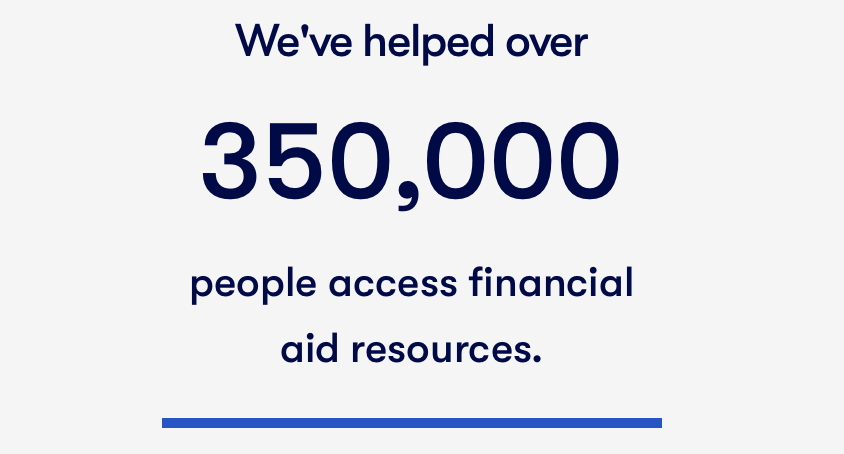
The truth was Frank had somewhere around 350,000 users. If they didn’t notice the jump from 350k to 4.25 million, well - as Javice would later argue - that’s on them.
THE FABRICATION
Step One: The Data Scientist
Ms. Javice hired a data scientist contractor.
4.25 million rows and columns of data were populated with an elegant snippet of Python. I have no doubt it looked magnificent. With FAFSA data on every line. Sadly it was all gibberish, but enough to slide past the due diligence.
Step Two: The Email Lists
But this problem was not likely going away. When faced with what they would have to give to JPM after the deal - well, the answer is obvious. Just buy a leads list! $100k - how would JPM ever know!
Well, everyone remembers buying their first leads list - as they are always total rubbish. So then they bought another one, bodged them together, made up all the other columns. Did it!
Step Three: The Slack Channel
Now, the planning and execution of buying random email addresses and pretending they were Frank customers needed to be carefully and clandestinely planned. Where best to do that planning other than the company’s Slack and email accounts? They even made a ‘4.25m-list’ Slack channel to discuss the purchase and how to fill empty rows with nonsense.
Imagine the delusions of brilliance to think 1) this would work and 2) to do it on your own software. But Javice knew she did not have to take the trouble to do it on another software. Not worth the energy. Because she could just hit delete after and nobody would ever know...
A quick hit of ‘restore’ on the deleted slack channel and there, served on a silver platter, the intricacies of the plot…
THE SLEIGHT OF HAND
The independent third party validation apparently worked. Whatever they sent - whether it was the fully synthetic dataset, the purchased email list hybrid, or some combination - it passed muster.
Partly, this was JPMorgan’s fault. Their due diligence was shoddy, but one doesn’t expect criminal fraud.
The signed purchase agreement stated: 4.265 million users.
Frank had 350,000.
The deal closed. Javice and her co-founders walked away with $175 million. JPMorgan now owned Frank.
THE UNRAVELING
The first mass email went out.
With 76% of emails bouncing back and only 1% opened, even the most forgiving at JPM smelled a rat.
A quick hit of ‘restore’ on the deleted slack channel and there, served on a silver platter, the intricacies of the plot: the refusal of Frank’s engineers to commit fraud, the purchase of a list of 4.25 million student emails, and - I like to think - her telling the others, “It’s ok, we can just delete this channel later...”
Surely now the jig is up. But Ms. Javice had four years’ worth of fibbing in her. One must grudgingly admire her ingenuity over the years:
Pre-investigation (late 2021 – early 2022)
1. “Students don’t check their .edu emails over the holidays.”
2. “University spam filters are blocking your campaign.”
3. “Some addresses were anonymised for privacy compliance.”
4. “It’s just a data-migration glitch.”
5. “We counted every student we reached - not only registered users.”
As JPMorgan’s internal probe began (mid-2022)
6. “The dataset was a privacy-safe sample, not a fake list.”
7. “The export script corrupted addresses when migrating from Frank’s system to JPMorgan’s.”
8. “JPMorgan knew the numbers were illustrative.”
9. “You were buying our reach, not a spreadsheet.”
10. “We built something that touched millions of students - that’s what mattered.”
After JPMorgan sued (late 2022)
11. “This is buyer’s remorse dressed up as fraud.”
12. “At worst, we disagreed on the definition of ‘user.’”
13. “I was just focused on helping students, not selling data.”
14. “The 4.25 million users number was known by them to be aspirational.”
15. “JPMorgan wanted me - my brand, my access, my credibility with Gen Z students.”
16. “No one was harmed; the bank still owns the tech.”
17. “I didn’t kill anyone.”
18. “JPM can easily afford it. Same as $50 to the average household.”
19. “If they didn’t notice the jump from 350k to 4.25m that happened the previous year, that’s on them.”
Criminal proceedings (2023 – 2025)
20. “I never intended to deceive anyone.”
21. “We acted under extreme pressure to close a fast-moving deal.”
22. “I didn’t code or generate the data myself - I trusted my team and contractor.”
23. “This was a civil misunderstanding, not a crime.”
24. “JPMorgan turned a blind eye - they didn’t care about the number.”
25. “They wanted a story, not statistics.”
26. “If I were a man, this would have been settled quietly.”
27. “I was a first-time founder who made mistakes.”
Post-conviction (sentencing / appeal period 2025)
28. “I’m focusing on my health and starting a family.”
29. “I still believe the trial was unfair.”
30. “They punished ambition - not fraud.”
There is zero chance that this girl has a broad circle of friends and neighbours who are sometimes short that week and cannot afford their Pilates lesson. In Miami Beach.
THE DEFENCE
Now you must be thinking this legal defence is sounding expensive? You’d be right. $115 million and counting! And somehow, JPM are on the hook for it all - so she is spending like a sailor in port!
When questioned, an ungodly series of lies and excuses spewed forth that is still going to this day.
Well, she was found guilty and sentencing came. Her procedural appeals have been without number. I kid you not, there was a precedent question for whether an ankle tag had to be removed as the person on bail had decided to become a Pilates instructor and it would stop her earning.
THE LETTERS
Well, that $115 million legal defence pulled out letters from a hundred different people saying what a good egg she was, so the sentence would be lenient.
If this was the sum that towerblocks of lawyers could dig up about her life - she must have been pretty terrible. Let’s have a look:
“Volunteering at a soup kitchen when she was nine years old and soon took over organising the evening service.” —Family Friend
That didn’t happen.
“Helped fund and later helped build an orphanage in Thailand.” —Family Friend
Part of her $6,000 holidays, it turns out. To wit, when I worked on a building site when I was 17, I did not build anything. I could not so much as saw a piece of wood straight. I moved vast quantities of sand and rubbish around with hands screaming with pain.
“Gives free Pilates lessons to friends and neighbours when they can’t afford the studio.” —Miami friend
There is zero chance that this girl has a broad circle of friends and neighbours who are sometimes short that week and cannot afford their Pilates lesson. In Miami Beach. Rocking up to the class with out-turned empty pockets hoping the just-started Pilates instructor would take pity and let them into the studio.
“Both her doormen said she was polite and respectful.”
Pretty sure that was not pushed along by her team. And is a veiled insult. And not written by a doorman. The implication is she refrains from screaming at her doormen.
“Frank was about the aid! Not the money.” —Lawyer
Weird that she was selling the whole company so the students would be bombarded with usurious loans. Let us not forget, the whole transaction was for Frank to sell students’ personal data to a commercial bank who had profit-maximising aims on naive students at the start of their journey. All of her customers were deceived as to her purposes.
Well… traditionally you go in the slammer once convicted.
THE SENTENCE
The judge looked at this manipulative, delusional fraudster and agreed - ”You are a good person... but you did a bad thing.” Quite a few, I’d say.
Well, the judge could only convict. Seven years. Ouch.
He was not moved enough by her contrition in her final statement:
“Most painfully, I have lost time. At 29, I put my life on hold, including my hopes of becoming a young mother. My mum is now approaching the age at which my grandmother and great-grandmother were diagnosed with pancreatic cancer.”
What kind of lunatic thinks she is uniquely suffering the travesty of age... at 32.
“I do not ask for forgiveness or to erase the seriousness of the past,”
She ended, just before immediately appealing the guilty verdict!
THE APPEAL
How can she carry on? Here was her rationale for a mis-trial and the basis of her (JPM-funded) appeal. Four things:
1. As her right-hand man was co-defendant, he prejudiced her trial by saying she, as CEO, was leading the fraud.
2. The judge recklessly ignored the FAQ page. In 2020 they changed the 350k to 4.5m users on the front page. The FAQ page was not updated. Therefore JPM should have seen that and known 4.5m was a sworn lie.
3. Something about “Blind Eye”, which I don’t understand, but seems to be founded on the judge changing five words at the wrong time.
4. The prosecution’s data expert who pulled the $100k leads lists to shreds did not actually do the analysis personally, instead relying on his team of lackys.
So… nothing. Well, doesn’t help as - traditionally - you go in the slammer once convicted.
THE BAIL
But don’t fear, our protagonist Ms Javice has been allowed on bail - on ‘moral grounds’.
The reason? Because she wants to try for a baby! Her fertility doctor wrote in to plead for the humanity.
Crumbs - you do a crime, get caught, sent to the nick. Nothing else came out in the public record.
And so Charlie Javice, convicted fraudster, remains in Miami Beach, teaching Pilates, planning motherhood, and spending JPMorgan’s money on appeals.
THE BOTTOM LINE
JPMorgan paid $175 million for a company whose actual user base was 350,000 - and whose “verified customer list” turned out to be worth exactly $105,000 at wholesale.
They are now funding the $115 million legal defence of the woman who sold it to them.
Frank’s homepage, before it was taken down, asked: “Why do 4.25 million students choose Frank?”
The answer, it turned out, was simple: they didn’t.
Lovely person. Lovely company